스레드 풀을 왜 사용할까?
자바 스레드 프로그래밍 Future, Executor 관련 클래스들을 공부하면서 계속 나오는 스레드 풀 Thread Pool 에 대해 알아보고자 한다. 해외 사이트 문서를 이용하여 실제 자바에서 스레드 풀이 어떻게 구현되는지도 간단히 알아보았다.
개념
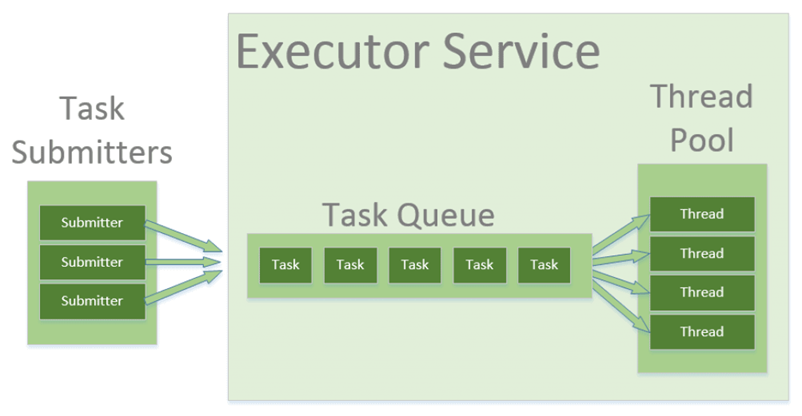 출처 : https://www.baeldung.com/thread-pool-java-and-guava
미리 일정 개수의 스레드를 미리 생성해 보관하고 있다가, 작업 요청이 발생하면 미리 생성해 둔 스래드로 작업을 처리하는 방식을 말한다. 이 때 작업이 끝난 스레드는 종료되지 않으며 다음 작업 요청이 들어올 때까지 대기했다가 재사용된다.
구성 요소
- 작업 스레드, Worker Thread
- 작업 큐, Task Queue
- 스레드 풀에 작업 요청이 들어요면 작업 큐에 작업이 쌓인다.
- 스레드 풀 안에 스레드들이 작업 큐의 작업을 받아 처리한다.
Pool, 풀이 왜 생겨났을까?
컴퓨터 과학에서 Pool은 메모리 위에 사용할 준비가 된 자원을 일정량 미리 만들어 둔 자원의 집합이다. 미리 만들어 두었기 때문에 새로 자원을 생성하지 않고 풀에서 꺼내 사용하고, 사용이 완료되면 풀에 다시 반환하는 형태로 사용된다.
미리 자원을 생성해 두었기 때문에 자원의 생성, 소멸 비용을 절약할 수 있다. 풀은 그냥 가져다 쓰기만 하면 된다. 자원의 생성, 소멸 비용을 절약할 수 있기 때문에 생겨난 것이 아닐까?
스레드 풀 이외에 다른 풀은 어떤 것이 있을까?
- Connection Pool, 커넥션 풀
- DB와 연결하는 것은 꽤 큰 비용이 든다. 미리 DB 커넥션을 만들어 두고 필요할 때마다 이 커넥션을 재사용하는 방식이다.
- String Pool, 스트링 풀
- Java String을 효율적으로 관리하기 위해 동일한 문자열 리터럴이 생성될 때, 새로 생성하지 않고 String Pool 내에 저장된 문자열을 그대로 참조한다.
왜 쓸까
작업 요청이 들어올 때마다 스레드를 매번 생성하고 작업을 할당하면 안 될까?
-
스레드 생성, 소멸 비용 절감
스레드를 매번 생성하고 소멸하는 작업은 오버헤드가 발생한다. 스레드를 생성할 때 필요한 메모리 공간을 할당하는 과정에서 CPU, 메모리 자원을 소모하며 OS는 새로운 스레드 스택을 할당하고 스케줄러에 등록 하는 등 초기화에 많은 비용이 든다. 스레드 해제 시에도 스레드가 사용한 메모리를 해제하는 과정에서 컨텍스트 정리를 위한 오버헤드를 유발한다.스레드 풀을 사용하면 새로운 작업이 발생할 때마다 스레드를 새로 생성하지 않고 미리 만들어 둔 스레들을 재사용하여 생성, 소멸에 대한 비용을 줄여 효율적으로 스레드를 관리할 수 있다.
-
리소스 관리
스레드 풀이 없다면 대량의 요청이 발생했을 때 요청에 대해 많은 양의 스레드 생성, 해제 작업으로 컴퓨팅 자원을 소모하게 되어 이는 애플리케이션의 성능 저하로 이어질 수 있다.스레드 풀을 사용하면 동시에 실행될 수 있는 스레드의 양이 제한되어 있어 스레드 폭증으로 인한 애플리케이션 성능 저하를 방지할 수 있다.
또한 요청이 폭증하여 사용할 수 있는 스레드가 없는 경우, 작업 큐에 대기하며 처리 순서가 관리된다. 사용 가능한 스레드가 생기면 일정한 순서대로 처리되도록 보장하여 리소스 부족 시 효율적으로 대처할 수 있다.
단점은 없을까?
메모리 낭비
스레드 풀은 일정 수의 스레드를 미리 만들어두는데, 너무 많은 스레드를 생성해 두고 다 사용하지 않으면 메모리만 차지하고 노는 스레드가 존재하게 되어 메모리 낭비로 이어질 수 있다.풀 크기 설정의 어려움
크기를 너무 작게 설정하면 동시 작업을 효율적으로 처리하지 못하여 성능이 저하될 수 있다. 반대로 너무 크게 설정하면 과도한 스레드 생성으로 인한 오버헤드, 자원 낭비가 발생한다.작업의 특성에 따른 비효율
스레드 풀의 스레드가 다 사용 중인 상태에서 대기 큐에 I/O 바운드 작업, 네트워크 연결을 기다리는 작업이 있으면 애플리케이션 성능이 급격히 저하될 수 있다.
Thread Pool in Java
Executors, Executor and ExecutorService
Executors 헬퍼 클래스는 스레드 풀 인스턴스를 만드는 데 필요한 여러 메서드를 제공한다.
Executor, ExecutorService 인터페이스를 사용하여 Java에서 다양한 형태의 스레드 풀을 구현할 수 있다.
Executor
Executor 인터페이스에는 Runnable 인스턴스를 실행하기 위한 execute() 메서드가 존재한다.
1
2

Executor executor = Executors.newSingleThreadExecutor();
executor.execute(() -> System.out.println("Hello World"));
위 코드는 단순히 화면에 ‘Hello World’ 문자열을 출력하는 단일 작업을 수행한다. 단일 스레드 풀과 작업을 순차적으로 실행하기 위한 무제한 대기열 queue 이다.
ExecutorService
ExecutorService 인터페이스는 작업 진행을 제어하고 서비스의 종료를 관리하는 다양한 메소드를 제공한다. 이 인터페이스를 사용하여 실행을 위한 작업을 submit하고 리턴된 Future 인스턴스를 사용하여 작업의 수행을 제어한다.
1
2
3
4

ExecutorService executorService = Executors.newFixedThreadPool(10);
Future<String> future = executorService.submit(() -> "Hello World");
// some operations
String result = future.get();
ThreadPoolExecutor
ThreadPoolExecutor는 다양한 파라미터와 튜닝을 위한 hooks을 제공하여 다양한 형태의 스레드 풀을 구현할 수 있다.
스레드 풀은 내부에 항상 유지되는 고정된 수의 코어 스레드와 생성되었다 더 이상 필요없을 때 제거될 수 있는 여분의 스레드로 구성된다.
주요 파라미터는 다음과 같다.
- corePoolSize
- 스레드 풀이 유지하는 최소 스레드 수
- 인스턴스화 되어 풀에 보관되는 코어 스레드 수
- maximumPoolSize
- 스레드 풀이 생성할 수 있는 최대 스레드 개수
- 새 작업이 들어왔을 때 모든 코어 스레드가 바쁘고 내부 큐가 가득찬 경우 스레드 풀의 크기는 maximumPoolSize까지 커질 수 있다.
- keepAliveTime
- corePoolSize를 초과하여 인스턴스화된 유휴 상태의 스레드가 유지될 수 있는 최대 시간
- 기본적으로
ThreadPoolExecutor는 제거할 때 코어 스레드가 아닌 여분의 스레드에만 적용된다. 코어 스레드에도 동일한 제거 정책을 적용하기 위해allowCoreThreadTimeOut(true)메서드를 호출할 수 있다.
위 파라미터를 활용한 일반적인 구성은 Executors static 메서드에 정의되어 있다.
-
Executors.newFixedThreadPool(int nThreads)
Executors의 내부 구현 코드를 보면1 2 3 4 5 6 7 8 9 10 11 12 13 14 15 16 17 18 19 20 21 22
public class Executors { /** * Creates a thread pool that reuses a fixed number of threads * operating off a shared unbounded queue. At any point, at most * {@code nThreads} threads will be active processing tasks. * If additional tasks are submitted when all threads are active, * they will wait in the queue until a thread is available. * If any thread terminates due to a failure during execution * prior to shutdown, a new one will take its place if needed to * execute subsequent tasks. The threads in the pool will exist * until it is explicitly {@link ExecutorService#shutdown shutdown}. * * @param nThreads the number of threads in the pool * @return the newly created thread pool * @throws IllegalArgumentException if {@code nThreads <= 0} */ public static ExecutorService newFixedThreadPool(int nThreads) { return new ThreadPoolExecutor(nThreads, nThreads, 0L, TimeUnit.MILLISECONDS, new LinkedBlockingQueue<Runnable>()); } ...
호출하는
ThreadPoolExecutor생성자의 구현 코드를 보면1 2 3 4 5 6 7 8 9 10 11
public class ThreadPoolExecutor extends AbstractExecutorService { ... public ThreadPoolExecutor(int corePoolSize, int maximumPoolSize, long keepAliveTime, TimeUnit unit, BlockingQueue<Runnable> workQueue) { this(corePoolSize, maximumPoolSize, keepAliveTime, unit, workQueue, Executors.defaultThreadFactory(), defaultHandler); } ...
maximumPoolSize와 corePoolSize가 동일하기 때문에 대기 큐에 요청이 쌓인다고 해서 스레드를 더 생성하지 않음을 알 수 있다.
keepAliveTime = 0인데 corePoolSize를 초과해서 스레드가 생성되지 않으므로 큰 의미가 없다.
LinkedBlockingQueue의 생성자 구현 코드를 보면1 2 3 4 5 6 7 8 9 10 11
public class LinkedBlockingQueue<E> extends AbstractQueue<E> { ... /** * Creates a {@code LinkedBlockingQueue} with a capacity of * {@link Integer#MAX_VALUE}. */ public LinkedBlockingQueue() { this(Integer.MAX_VALUE); } ... }
workingQueue 생성 시 디폴트 사이즈가
Integer.MAX_VALUE로 사실상 무제한이다.다음은 간단한 테스트 코드이다.
1
2
3
4
5
6
7
8
9
10
11
12
13
14
15
16

 ThreadPoolExecutor executor = (ThreadPoolExecutor) Executors.newFixedThreadPool(2);
 executor.submit(() -> {
     Thread.sleep(1000);
     return null;
 });
 executor.submit(() -> {
     Thread.sleep(1000);
     return null;
 });
 executor.submit(() -> {
     Thread.sleep(1000);
     return null;
 });

 System.out.println(executor.getPoolSize());
 System.out.println(executor.getQueue().size());
1
2

 2
 1
크기 2인 고정 사이즈의 스레드 풀을 생성했다. 3개의 작업을
submit했지만 동시에 2개의 작업만 실행 가능하므로 대기 큐에 마지막에submit한 작업이 들어가게 된다.따라서 poolSize는 2이고, queue의 사이즈는 1이 된다.
-
Executors.newCachedThreadPool()
이 메서드는 스레드 수를 전혀 받지 않는다. 내부 구현 코드를 보면,
1
2
3
4
5
6
7
8
9
10
11
12
13
14
15
16
17
18
19
20
21
22

 public class Executors {
     /**
      * Creates a thread pool that creates new threads as needed, but
      * will reuse previously constructed threads when they are
      * available.  These pools will typically improve the performance
      * of programs that execute many short-lived asynchronous tasks.
      * Calls to {@code execute} will reuse previously constructed
      * threads if available. If no existing thread is available, a new
      * thread will be created and added to the pool. Threads that have
      * not been used for sixty seconds are terminated and removed from
      * the cache. Thus, a pool that remains idle for long enough will
      * not consume any resources. Note that pools with similar
      * properties but different details (for example, timeout parameters)
      * may be created using {@link ThreadPoolExecutor} constructors.
      *
      * @return the newly created thread pool
      */
     public static ExecutorService newCachedThreadPool() {
         return new ThreadPoolExecutor(0, Integer.MAX_VALUE,
                                       60L, TimeUnit.SECONDS,
                                       new SynchronousQueue<Runnable>());
     }
corePoolSize를 0으로 설정하고 maximumPoolSize를 Integer.MAX_VALUE로 설정한다. keepAliveTime은 60초다.
파라미터 값을 통해 스레드 풀이 제한 없이 스레드 풀이 커질 수 있음을 알 수 있다. 그러나 스레드가 더 이상 필요 없을 때 60초 동안 활동성이 없으면 폐기된다. 애플리케이션에 주로 수명이 짧은 작업이 많은 경은 경우에 사용된다.
내부적으로 SynchronousQueue 인스턴스가 사용되기 때문에 대기열 크기는 항상 0이다. SynchronousQueue에서 삽입 및 제거 작업은 항상 동시에 발생한다. 따라서 대기열에는 실제로 아무것도 포함되지 않는다.
다음은 간단한 테스트 코드이다.
1
2
3
4
5
6
7
8
9
10
11
12
13
14
15
16

 ThreadPoolExecutor executor = (ThreadPoolExecutor) Executors.newCachedThreadPool();
 executor.submit(() -> {
     Thread.sleep(1000);
     return null;
 });
 executor.submit(() -> {
     Thread.sleep(1000);
     return null;
 });
 executor.submit(() -> {
     Thread.sleep(1000);
     return null;
 });

 System.out.println(executor.getPoolSize());
 System.out.println(executor.getQueue().size());
1
2

 3
 0
처음 풀 생성 시 0으로 생성됬을 것이지만,
submit을 3번 했기 때문에 풀의 크기는 3이 된다. 큐 사이즈가 0인 이유는 스레드 풀에서 스레드를 받아 큐에 대기중인 작업이 없기 때문이다. -
Executors.newSingleThreadExecutor()
이 메소드는 싱글 스레드를 포함하는 ThreadPoolExecutor를 생성한다.
SingleThreadExecutor는 이벤트 루프를 만드는 데 이상적이다.내부 구현 코드를 보면,
1
2
3
4
5
6
7
8
9
10
11
12
13
14
15
16
17
18
19
20

 public class Executors {
 ...
     /**
      * Creates an Executor that uses a single worker thread operating
      * off an unbounded queue. (Note however that if this single
      * thread terminates due to a failure during execution prior to
      * shutdown, a new one will take its place if needed to execute
      * subsequent tasks.)  Tasks are guaranteed to execute
      * sequentially, and no more than one task will be active at any
      * given time. Unlike the otherwise equivalent
      * {@code newFixedThreadPool(1)} the returned executor is
      * guaranteed not to be reconfigurable to use additional threads.
      *
      * @return the newly created single-threaded Executor
      */
     public static ExecutorService newSingleThreadExecutor() {
         return new FinalizableDelegatedExecutorService
             (new ThreadPoolExecutor(1, 1,
                                     0L, TimeUnit.MILLISECONDS,
                                     new LinkedBlockingQueue<Runnable>()));
corePoolSize, maximumPoolSize는 1이고, keepAliveTime 은 0임을 확인할 수 있다.
다음은 간단한 테스트 코드이다.
1
2
3
4
5
6
7
8
9

 AtomicInteger counter = new AtomicInteger();

 ExecutorService executor = Executors.newSingleThreadExecutor();
 executor.submit(() -> {
     counter.set(1);
 });
 executor.submit(() -> {
     counter.compareAndSet(1, 2);
 });
1

 2
작업이 순차적으로 수행되기 때문에 수행 후
counter값은 2이다.또한 이 ThreadPoolExecutor는 Immutable Wrapper로 랩핑되어 있으므로 생성 후 재구성될 수 없다. 그렇기 때문에
ThreadPoolExecutor로 캐스팅할 수 없다.
ScheduledThreadPoolExecutor
ScheduledThreadPoolExecutor는 ThreadPoolExecutor 클래스를 확장하고 여러 추가 메서드와 함께 ScheduledExecutorService 인터페이스를 구현한다.
-
schedule메서드는 지정된 딜레이 타임 후에 작업을 수행하도록 설정한다.
1
2
3
4
5
6
7
8
9
10
11
12
13
14
15
16
17
18
19
20
21
22
23
24
25
26
27
28
29
30
31
32
33
34
35
36
37

/**
 * Submits a periodic action that becomes enabled first after the
 * given initial delay, and subsequently with the given period;
 * that is, executions will commence after
 * {@code initialDelay}, then {@code initialDelay + period}, then
 * {@code initialDelay + 2 * period}, and so on.
 *
 * <p>The sequence of task executions continues indefinitely until
 * one of the following exceptional completions occur:
 * <ul>
 * <li>The task is {@linkplain Future#cancel explicitly cancelled}
 * via the returned future.
 * <li>Method {@link #shutdown} is called and the {@linkplain
 * #getContinueExistingPeriodicTasksAfterShutdownPolicy policy on
 * whether to continue after shutdown} is not set true, or method
 * {@link #shutdownNow} is called; also resulting in task
 * cancellation.
 * <li>An execution of the task throws an exception.  In this case
 * calling {@link Future#get() get} on the returned future will throw
 * {@link ExecutionException}, holding the exception as its cause.
 * </ul>
 * Subsequent executions are suppressed.  Subsequent calls to
 * {@link Future#isDone isDone()} on the returned future will
 * return {@code true}.
 *
 * <p>If any execution of this task takes longer than its period, then
 * subsequent executions may start late, but will not concurrently
 * execute.
 *
 * @throws RejectedExecutionException {@inheritDoc}
 * @throws NullPointerException       {@inheritDoc}
 * @throws IllegalArgumentException   {@inheritDoc}
 */
public ScheduledFuture<?> scheduleAtFixedRate(Runnable command,
                                              long initialDelay,
                                              long period,
                                              TimeUnit unit) {
-
scheduleAtFixedRate메서드는 지정된 초기 딜레이 후에 작업을 실행한 다음 특정 주기동안 반복적으로 실행할 수 있게 해 준다.period파라미터는 작업의 시작 시간 사이에 측정된 시간이므로 실행 속도가 고정된다.
1
2
3
4
5
6
7
8
9
10
11
12
13
14
15
16
17
18
19
20
21
22
23
24
25
26
27
28
29
30
31
32

/**
 * Submits a periodic action that becomes enabled first after the
 * given initial delay, and subsequently with the given delay
 * between the termination of one execution and the commencement of
 * the next.
 *
 * <p>The sequence of task executions continues indefinitely until
 * one of the following exceptional completions occur:
 * <ul>
 * <li>The task is {@linkplain Future#cancel explicitly cancelled}
 * via the returned future.
 * <li>Method {@link #shutdown} is called and the {@linkplain
 * #getContinueExistingPeriodicTasksAfterShutdownPolicy policy on
 * whether to continue after shutdown} is not set true, or method
 * {@link #shutdownNow} is called; also resulting in task
 * cancellation.
 * <li>An execution of the task throws an exception.  In this case
 * calling {@link Future#get() get} on the returned future will throw
 * {@link ExecutionException}, holding the exception as its cause.
 * </ul>
 * Subsequent executions are suppressed.  Subsequent calls to
 * {@link Future#isDone isDone()} on the returned future will
 * return {@code true}.
 *
 * @throws RejectedExecutionException {@inheritDoc}
 * @throws NullPointerException       {@inheritDoc}
 * @throws IllegalArgumentException   {@inheritDoc}
 */
public ScheduledFuture<?> scheduleWithFixedDelay(Runnable command,
                                                 long initialDelay,
                                                 long delay,
                                                 TimeUnit unit) {
-
scheduleWithFixedDelay메서드는 주어진 작업을 반복적으로 실행한다는 점에서scheduleAtFixedRate메서드와 유사하지만, 지정된 딜레이 타임은 이전 작업의 끝과 다음 작업의 시작 시간 사이에서 측정된다. 실행 속도는 주어진 작업을 실행하는데 걸리는 시간에 따라 달라질 수 있다.
일반적으로 Executors.newScheduledThreadPool() 메서드를 사용하여 지정된 corePoolSize, 제한 없는 maximumPoolSize 및 keepAliveTime = 0을 갖는 ScheduledThreadPoolExecutor 를 생성한다.
500ms 내에 실행되도록 작업을 예약하는 방법은 다음과 같다.
1
2
3
4

ScheduledExecutorService executor = Executors.newScheduledThreadPool(5);
executor.schedule(() -> {
    System.out.println("Hello World");
}, 500, TimeUnit.MILLISECONDS);
다음 코드는 500ms 지연 후 작업을 실행한 다음 100ms마다 반복하는 방법을 보여준다. 작업을 예약한 후 CountDownLatch 잠금을 사용하여 세 번 실행될 때까지 기다린 후 Future.cancel() 메서드를 사용하여 취소한다.
1
2
3
4
5
6
7
8
9

CountDownLatch lock = new CountDownLatch(3);
ScheduledExecutorService executor = Executors.newScheduledThreadPool(5);
ScheduledFuture<?> future = executor.scheduleAtFixedRate(() -> {
    System.out.println("Hello World");
    lock.countDown();
}, 500, 100, TimeUnit.MILLISECONDS);

lock.await(1000, TimeUnit.MILLISECONDS);
future.cancel(true);
ForkJoinPool
ForkJoinPool은 Java 7에 도입된 Fork/Join Framework의 핵심이다. 재귀 방식으로 여러 작업을 나누어 문제를 해결한다. 서브 태스크를 포함한 모든 작업은 실행되기 위해 자체 스레드가 필요하므로 간단한 ThreadPoolExecutor를 사용하면 스레드가 빠르게 소진된다.
Fork/Join Framework에서 모든 작업은 수많은 여러 서브 태스크를 생성(fork) 하고 join 메서드를 사용하여 서브 태스크들의 완료될 때까지 기다린다. 이 프레임워크의 장점은 각 작업 및 서브 태스크를 위한 새로운 스레드를 생성하지 않는 대신 Work Stealing 알고리즘을 구현한다는 점이다.
ForkJoinPool을 사용하여 노드 트리를 탐색하고 모든 리프 값의 합을 계산하는 간단한 예제 코드이다.
1
2
3
4
5
6
7
8
9
10
11
12
13
14
15
16
17
18
19
20
21
22
23
24
25
26
27
28
29
30
31
32
33
34
35

public class CountingTask extends RecursiveTask<Integer> {

    private final TreeNode node;

    public CountingTask(TreeNode node) {
        this.node = node;
    }

    @Override
    protected Integer compute() {
        return node.value + node.children.stream()
                .map(childNode -> new CountingTask(childNode).fork())
                .collect(Collectors.summingInt(ForkJoinTask::join));
    }

    public static void main(String[] args) {
        TreeNode tree = new TreeNode(5,
                new TreeNode(3), new TreeNode(2,
                new TreeNode(2), new TreeNode(8)));

        ForkJoinPool forkJoinPool = ForkJoinPool.commonPool();
        int sum = forkJoinPool.invoke(new CountingTask(tree));
        System.out.println(sum);
    }

    static class TreeNode {
        int value;
        Set<TreeNode> children;

        TreeNode(int value, TreeNode... children) {
            this.value = value;
            this.children = new HashSet<>(Arrays.asList(children));
        }
    }
}
트리의 모든 값을 병렬로 합산하려면 RecursiveTask<Integer> 클래스를 확장해야 한다. 각 작업은 자체 토드를 받고 해당 값을 자식 값의 합에 더한다.
자식 값의 합을 계산하기 위해 작업 구현은 다음을 수행한다.
- 자식 set의 stream을 만든다.
- 이 stream의 map을 만들고 각 요소에 대해 새 CountingTask를 생성한다.
- 각 서브 태스크를 fork 하여 실행한다.
- fork된 각 작업에서 join 메서드를 호출하여 결과를 collect 한다.
-
Collectors.summingInt컬렉터를 사용하여 결과를 합산한다.
References
- gpt4o
- https://www.baeldung.com/thread-pool-java-and-guava
- https://tecoble.techcourse.co.kr/post/2021-09-18-java-thread-pool/